1973 Year Discovered | 50%+ Drop After Age 60 | 8–12 wk Full Results Timeline | 3-AA Tripeptide Structure |
What Is GHK-Cu Peptide?
Definition: GHK-Cu is a naturally occurring tripeptide — Glycyl-L-Histidyl-L-Lysine — chemically bonded with a copper ion (Cu²⁺). This copper-peptide complex is found in human plasma, saliva, and urine, where it plays a central role in tissue repair, inflammation regulation, and cellular regeneration.
Researchers first isolated GHK in 1973, when scientists discovered it had a remarkable ability to prompt older liver tissue to synthesize proteins that resembled those found in much younger tissue. This discovery ignited decades of follow-on research revealing that GHK affects numerous cell types throughout the body — from skin fibroblasts to lung epithelial cells, hair follicle papilla cells to immune-modulating macrophages.
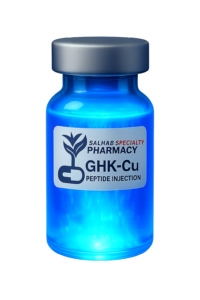
The peptide exists naturally in human blood plasma at relatively high concentrations during youth, but levels decline sharply with age. By the time a person reaches 60, plasma GHK levels have dropped by more than 50%. Researchers believe this reduction directly correlates with a measurable decline in tissue regeneration capacity — potentially explaining slower wound healing, increasing skin laxity, and other common signs of aging.
What makes GHK particularly interesting is its extraordinarily strong affinity for copper, one of the human body’s essential trace minerals. When GHK binds copper to form GHK-Cu, the resulting complex demonstrates potent protective, anti-inflammatory, and regenerative capabilities that neither GHK nor copper exhibits alone. This synergy has made GHK-Cu one of the most scientifically compelling ingredients in both medical and cosmetic research over the past three decades.
The copper peptide complex modulates a broad range of biological activities. It upregulates collagen, elastin, and glycosaminoglycan synthesis; activates antioxidant enzymes; promotes angiogenesis (new blood vessel formation); modulates metalloproteinases (enzymes that break down damaged tissue matrix); and influences the expression of hundreds of genes associated with inflammation, DNA repair, and cellular metabolism. Its wide-ranging biological activity has prompted researchers to call GHK-Cu a “master regulator” of connective tissue remodeling.
How Does GHK-Cu Work? The Mechanism of Action
Understanding how GHK-Cu works helps explain why it produces such a diverse range of biological effects. The peptide operates through several overlapping mechanisms simultaneously:
Key Biological Mechanisms
🔬 Collagen Stimulation Activates fibroblasts to produce Types I and III collagen, the structural proteins responsible for skin firmness and elasticity. | 🧬 Gene Expression Modulation Influences expression of over 4,000 genes — upregulating regenerative pathways while downregulating inflammatory and pro-aging signals. |
🩸 Angiogenesis Promotes new blood vessel formation, improving nutrient and oxygen delivery to healing tissues and hair follicles. | ⚡ Antioxidant Activation Upregulates superoxide dismutase and other antioxidant enzymes, protecting cells from oxidative stress and free radical damage. |
One of GHK-Cu’s most important functions is its role as a biological “damage signal.” When tissue is injured or degraded, GHK-Cu concentrations spike locally, recruiting stem cells and growth factors to the site. This makes the peptide a natural initiator of the wound repair cascade. Exogenous application — through topical creams, serums, or injections — essentially mimics this signal, prompting the body’s repair machinery to activate even in the absence of fresh injury.
Additionally, GHK-Cu’s ability to modulate transforming growth factor beta (TGF-β) is noteworthy. By selectively inhibiting certain TGF-β isoforms, GHK-Cu helps prevent excessive fibrosis and scarring during wound healing — promoting regenerative repair rather than scar tissue formation. This mechanism is one reason why post-procedure use of copper peptides has become popular in aesthetic medicine.
GHK-Cu Peptide Benefits: What Does the Research Show?
GHK-Cu has accumulated a substantial body of peer-reviewed research across multiple therapeutic areas. Below is a detailed breakdown of the most well-supported benefits.
1. Skin Aging, Texture, and Photorejuvenation
The most extensively studied application of GHK-Cu is in skin rejuvenation, particularly for photoaged and chronologically aged skin. The results from clinical trials have been consistently impressive.
In one controlled trial, women applied a GHK-Cu facial cream daily for three months. At the end of the study period, researchers measured significant improvements in skin density, skin thickness, and dermal firmness. Visible sagging was reduced, and fine lines showed measurable improvement. A parallel trial found that women using a copper peptide eye cream for the same three-month period showed superior improvement in periorbital wrinkles and skin thickness compared to both a placebo group and a group using vitamin K cream — a well-established cosmetic ingredient.
📊 Research Highlight
Multiple peer-reviewed studies demonstrate that topical GHK-Cu increases collagen and elastin production, boosts dermal glycosaminoglycan content (the molecules that maintain skin hydration and plumpness), and measurably improves skin elasticity with consistent daily use over 8–12 weeks.
Beyond structural improvements, GHK-Cu exerts protective effects against UV-induced damage. The peptide’s antioxidant enzyme activation — particularly superoxide dismutase — helps neutralize the reactive oxygen species generated by sun exposure. This dual action of repair and protection makes GHK-Cu especially valuable for skin that has already sustained photodamage.
Additional documented effects on skin include enhanced epidermal barrier function, reduced appearance of age spots through normalization of pigmentation-related enzymes, improved wound and scar healing in post-procedure skin, and increased skin hydration through stimulation of hyaluronic acid and proteoglycan synthesis.
2. Hair Growth and Follicle Health
GHK-Cu’s potential as a hair growth agent has attracted considerable research attention, and the mechanisms appear robust. Hair loss — whether androgenetic (pattern baldness), diffuse thinning, or stress-related — frequently involves follicle miniaturization, reduced blood supply to the scalp, and decreased dermal papilla cell activity. GHK-Cu addresses all three simultaneously.
- Fibroblast Activation: GHK-Cu activates dermal fibroblasts surrounding hair follicles, stimulating the production of growth factors that support follicle viability and cycling.
- Angiogenesis: By promoting new capillary formation in the scalp’s dermal layer, GHK-Cu ensures that follicles receive the oxygen and nutrients needed for active growth — a critical bottleneck in follicle miniaturization.
- TGF-β Inhibition: Transforming growth factor beta is one of the primary signals that drives hair follicle miniaturization and premature catagen (resting phase) entry. GHK-Cu’s inhibition of specific TGF-β isoforms helps keep follicles in the active growth (anagen) phase longer.
- Dermal Papilla Cell Support: Dermal papilla cells, located at the base of each follicle, are the master regulators of hair growth. GHK-Cu has been shown to enhance the proliferation and function of these cells, directly supporting the growth cycle.
- Scalp Microenvironment: The peptide’s anti-inflammatory effects help reduce the chronic low-grade scalp inflammation that contributes to follicle damage in common forms of hair loss.
Comparative studies have shown copper peptide solutions performing favorably against established hair loss treatments, with the added benefit of improving scalp skin quality and tolerability. For individuals seeking a non-pharmacological approach to thinning hair, GHK-Cu represents one of the most mechanistically well-supported options available.
3. Wound Healing and Tissue Repair
Wound healing represents one of GHK-Cu’s oldest and most thoroughly documented applications. The peptide plays a natural physiological role in initiating and coordinating tissue repair, and exogenous administration significantly amplifies this process.
In rabbit wound models, GHK-Cu demonstrated measurably accelerated wound contraction, improved collagen deposition, stimulated capillary ingrowth into healing tissue, and enhanced local antioxidant enzyme activity. Collagen dressings incorporating the peptide produced significantly faster healing outcomes in both healthy and diabetic rat models — the latter representing a particularly challenging wound-healing scenario given the microvascular and immune dysfunction characteristic of diabetes.
The peptide’s anti-fibrotic properties mean that healing occurs with better tissue organization and reduced scar formation compared to untreated wounds. This makes GHK-Cu particularly attractive in post-surgical, post-laser, or post-procedure contexts where minimizing scarring while maximizing tissue restoration is the goal.
⚠️ Important Consideration
Chronic wounds — including diabetic foot ulcers, pressure sores, and venous ulcers — present a particular challenge. These wound environments contain elevated levels of proteolytic enzymes that actively break down GHK-Cu, substantially limiting the peptide’s local effectiveness. Alternative delivery systems or adjunctive approaches may be required for chronic wound applications.
4. COPD and Lung Function
One of the more surprising areas of GHK-Cu research involves lung disease. Laboratory studies published in peer-reviewed journals found that GHK-Cu was capable of restoring normal gene expression patterns in lung cells from COPD (chronic obstructive pulmonary disease) patients. Researchers identified 127 genes involved in emphysema pathology whose expression was substantially reversed by GHK-Cu treatment — a finding that led investigators to suggest the peptide may offer a novel approach to arresting or reversing some gene expression changes associated with the disease.
While this research remains at the laboratory stage and has yet to translate into confirmed clinical outcomes for COPD patients, the mechanistic findings are compelling. The peptide’s known anti-inflammatory properties, combined with its ability to modulate collagen metabolism in pulmonary connective tissue, provide a plausible biological rationale for investigating its therapeutic potential in obstructive lung disease.
5. Cancer Research and Tumor Suppression
The relationship between GHK-Cu and cancer is nuanced — and clinically important to understand. On one hand, GHK-Cu promotes cell proliferation and angiogenesis, both of which are processes exploited by growing tumors. On the other hand, laboratory and animal research demonstrates meaningful anti-cancer properties that complicate a simplistic assessment.
Notably, GHK-Cu has been shown to suppress the expression of metastasis-associated genes in cancer cell lines — reducing the signaling that drives cancer spread. In animal models, GHK-Cu combined with vitamin C inhibited the growth of aggressive cancer lines that would otherwise proliferate unchecked. Research has also identified GHK-Cu’s ability to normalize the abnormal gene expression patterns associated with malignant transformation, potentially reorienting cancer cells toward more differentiated, less aggressive behavior.
However, these findings do not mean GHK-Cu is safe or appropriate for individuals with active or suspected cancer without medical supervision. The pro-angiogenic effects are a legitimate concern, and anyone with a personal or family history of cancer should consult an oncologist before considering GHK-Cu therapy.
6. Neuroprotection, Pain Relief, and Anti-Anxiety Effects
Emerging research suggests GHK-Cu may have broader systemic effects beyond skin and tissue. Preliminary studies point to potential analgesic (pain-relieving) properties — an observation consistent with the peptide’s anti-inflammatory mechanisms. Animal studies have also suggested GHK-Cu may exert anxiolytic effects, possibly through its ability to influence gene expression in neuronal tissue.
Neuroprotective effects have been proposed based on the peptide’s ability to reduce oxidative stress and modulate brain-derived neurotrophic factor (BDNF) expression. While these applications remain preliminary and human clinical trials are lacking, they point toward GHK-Cu as a systemic biological regulator rather than a compound with strictly local effects. Further research in these areas is ongoing.
GHK-Cu Peptide Injection Before & After Results
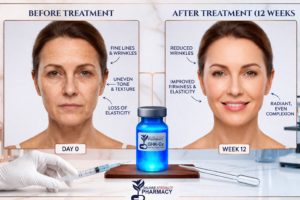
Individual results may vary. Shown are representative outcomes from consistent GHK-Cu use over 8–12 weeks.
Before-and-after clinical photography from GHK-Cu peptide trials consistently demonstrates visible improvements in skin texture, tone, and firmness. Improvements are typically gradual — the peptide works by supporting the body’s natural repair machinery rather than producing acute or surface-level changes. The most commonly documented outcomes include:
- Reduction in the depth and visibility of fine lines and moderate wrinkles
- Improved skin firmness and reduced jowl laxity with consistent facial application
- More even skin texture and reduction in rough or crepey areas
- Enhanced skin radiance and reduction in dull, gray undertones associated with aging
- Visible reduction in scar appearance over 3–6 months of targeted use
- Increased hair density and reduced scalp visibility with scalp application protocols
Injected formulations, when properly compounded and administered under clinical supervision, may produce more pronounced results in targeted areas. Injectable delivery bypasses the skin barrier that limits topical absorption, allowing higher concentrations to reach the dermal and subdermal layers where fibroblast activity and collagen synthesis occur most actively.
GHK-Cu Safety Profile and Side Effects
Overall Safety
GHK-Cu benefits from a decades-long safety record in both skincare and wound care applications. The peptide is naturally occurring, produced by the human body, non-toxic at therapeutic concentrations, and effective at very low doses — often in the nanomolar to micromolar range. Research consistently describes GHK-Cu as safe and well-tolerated across the populations studied. No significant systemic toxicity has been documented with standard topical or low-dose injectable use.
Safety Overview at a Glance
| Naturally occurring in the body | ✓ LOW RISK |
| Effective at nanomolar concentrations | ✓ LOW RISK |
| Copper toxicity (with overuse) | ⚠ MODERATE — follow dosing |
| Active cancer / Wilson’s disease | ✗ CONSULT PHYSICIAN |
| Long-term human data (>12 months) | ? LIMITED DATA |
Copper Toxicity
While unlikely with standard product use at recommended doses, using GHK-Cu formulations in excessive quantities — or combining multiple copper peptide products simultaneously — could theoretically lead to copper overload. Copper toxicity symptoms include abdominal pain, nausea and vomiting, fever, general weakness, tremors, and a persistent metallic taste in the mouth. Liver and kidney involvement can occur in severe cases, though this is exceedingly rare with topical use at normal concentrations. Injectable formulations carry a somewhat higher theoretical risk simply due to more direct systemic exposure and should be administered within a medically supervised protocol.
Cancer and Angiogenesis Considerations
GHK-Cu’s angiogenic effects — its ability to stimulate new blood vessel growth — are central to its wound healing and tissue repair properties. However, tumor growth beyond a few millimeters requires angiogenesis to sustain the cancer’s blood supply. For this reason, despite the anti-tumor properties noted in laboratory research, individuals with active cancer, a recent cancer diagnosis, or a significant family history of cancer should exercise meaningful caution. Consultation with an oncologist before initiating GHK-Cu therapy is strongly recommended in these cases.
Mild and Local Side Effects
The most commonly reported adverse reactions with topical GHK-Cu are localized and mild: temporary redness, itching, or mild skin irritation at the application site. These reactions typically resolve quickly and are most common when starting use or applying too much product. Performing a patch test on a small area of skin before full facial or scalp application is recommended, particularly for individuals with sensitive skin.
The “Copper Uglies” Phenomenon
A small subset of users report a paradoxical phenomenon sometimes called the “copper uglies” — an apparent worsening of skin appearance or increased skin aging rather than improvement. This effect remains poorly understood in clinical literature and is reported infrequently, but is worth understanding.
The leading proposed mechanism involves copper’s regulation of matrix metalloproteinases (MMPs) — enzymes responsible for degrading and remodeling the extracellular matrix. At optimal concentrations, GHK-Cu promotes a balanced MMP activity profile that favors tissue remodeling and regeneration. At excessive concentrations — particularly when multiple copper peptide products are layered together — MMP activity may shift into a net degradative mode, breaking down existing collagen faster than it is replaced. Using GHK-Cu at recommended concentrations and avoiding simultaneous use of multiple copper peptide products is the most straightforward way to minimize this risk.
Limited Long-Term Human Data
Despite its decades of use in skincare formulations, no human studies have specifically examined the effects of prolonged GHK-Cu use beyond 12 months. Most clinical trials have followed participants for three to six months. While the available short-term evidence is reassuring and no long-term safety concerns have been identified in rodent studies, practitioners and users should remain aware that extended human data is limited.
Who Should — and Shouldn’t — Use GHK-Cu?
✓ Good Candidates
| ✗ Should Consult First or Avoid
|
How to Use GHK-Cu: Application Methods and Best Practices
Available Delivery Methods
GHK-Cu is available in several formulations, each with distinct advantages and considerations:
- Topical Creams and Serums: The most widely used and extensively studied delivery method. Suitable for daily home use and backed by the strongest clinical evidence base. Best for maintaining skin health over time and for individuals beginning GHK-Cu use for the first time.
- Injectable Formulations: Administered intradermally or subcutaneously, injectables deliver GHK-Cu directly to the dermal and subdermal layers, bypassing the absorption barrier of intact skin. This route is favored in clinical settings for more targeted or intensive interventions. Learn how to properly inject GHK-Cu →
- Oral Formulations: Available but less studied. The bioavailability of orally administered peptides is generally lower due to gastrointestinal degradation, and the systemic distribution profile differs substantially from topical or injectable routes. Research on oral GHK-Cu remains limited compared to other delivery methods.
Most published clinical research focuses on topical administration, making it the default recommendation for individuals without specific medical indications that might favor injectable delivery. However, compounding pharmacies can prepare injectable GHK-Cu formulations to pharmaceutical-grade standards for patients whose clinical presentation warrants a more intensive approach.
Daily Application Protocol
One practical advantage of GHK-Cu is its photostability — unlike retinoids or certain vitamin C derivatives, the peptide does not increase UV sensitivity. This means it can be applied either in the morning or evening without concern about sun-related reactions. That said, sunscreen should always be part of a daytime skincare routine regardless of which active ingredients are being used.
📋 Recommended Application Protocol
| 1 | Cleanse: Wash the face or target area with a gentle, non-stripping cleanser. Pat dry — do not rub. |
| 2 | Apply GHK-Cu: Apply a small, pea-sized amount (for face) and massage gently in upward circular motions. Start with a minimal amount and increase gradually over the first two weeks to assess skin tolerance. |
| 3 | Moisturize: Follow with a gentle, non-comedogenic moisturizer to lock in hydration. Avoid heavy occlusive products that may interfere with peptide absorption. |
| 4 | Sunscreen (AM only): Apply broad-spectrum SPF 30+ as the final step in your morning routine. Daily UV protection preserves the gains GHK-Cu helps create. |
Ingredient Interactions to Know
GHK-Cu is generally well-tolerated alongside most skincare ingredients, but there are important compatibility considerations:
- Avoid combining with strong retinoids at the same time: Retinoids can cause irritation independently; layering with GHK-Cu may increase sensitivity during the adjustment period. Use on alternating nights or at different times of day.
- Avoid high-concentration vitamin C serums: Ascorbic acid at high concentrations can degrade copper peptides through oxidation, reducing their efficacy. If using both, apply at different times of day.
- Avoid chemical exfoliants (AHAs/BHAs) immediately before or after: These alter skin pH in ways that may reduce peptide activity and can increase irritation risk.
- Do not layer multiple copper peptide products: As noted above, copper overload at the application site may activate net-degradative MMP activity — the primary proposed mechanism of the “copper uglies.”
Expected Timeline for Results
Managing expectations is an important part of GHK-Cu success. The peptide works by supporting intrinsic biological repair processes — not by producing surface-level cosmetic effects. This means results are gradual and cumulative rather than immediate. Here is a realistic timeline based on clinical research:
Finding Quality GHK-Cu Products: What to Look For
Quality is not uniform across the GHK-Cu market. The compound is listed as Copper Tripeptide-1 on cosmetic ingredient labels (INCI nomenclature), and it appears in a wide range of products at varying concentrations and formulation qualities. When evaluating any GHK-Cu product, consider the following criteria:
- Pharmaceutical-grade purity: For topical formulations, ensure the product uses pharmaceutical-grade or cosmetic-grade GHK-Cu synthesized under controlled conditions, not research-grade material. Research-grade peptides carry different purity standards and are not manufactured for human application.
- Appropriate concentration: Research-effective concentrations typically range from 0.1% to 1% in topical formulations. Products that do not disclose peptide concentration or list it very low in the ingredient deck may not deliver meaningful biological activity.
- Stable packaging: Copper peptides can degrade with prolonged exposure to air and light. Airless pump packaging or opaque containers are preferable to open jars.
- Compounded injectables: For injectable formulations, exclusively use product sourced from a licensed compounding pharmacy that follows USP 797 or equivalent sterility and quality standards. Never use research-grade GHK-Cu for injection — this is a significant safety risk.
- Transparent ingredient sourcing: Reputable suppliers are transparent about the source and synthesis process of their peptide raw materials. If a product cannot provide a certificate of analysis (CoA) on request, that is a meaningful quality concern.
Salhab Pharmacy compounds GHK-Cu formulations to pharmaceutical-grade standards, prepared under the supervision of licensed pharmacists and physicians. All compounded peptide products are manufactured in compliance with sterility and purity requirements applicable to patient-use preparations.
Frequently Asked Questions About GHK-Cu Peptide
Final Thoughts: Is GHK-Cu Peptide Worth It?
GHK-Cu occupies a genuinely distinctive position in the landscape of anti-aging and regenerative treatments. Unlike many cosmetic ingredients that rely primarily on marketing rather than mechanism, copper peptide carries substantial scientific backing — decades of peer-reviewed research across skin aging, wound healing, hair loss, and systemic biology. Its safety profile is reassuring, its mechanisms are well-characterized, and its efficacy for photoaged and chronologically aged skin is supported by multiple controlled clinical trials.
It is not a miracle cure, and it is not instantaneous. The peptide works with the body’s own biological repair systems, which means consistent long-term use is necessary for meaningful cumulative benefit. But for individuals willing to commit to a structured protocol and manage ingredient interactions thoughtfully, GHK-Cu represents one of the most scientifically credible tools available for addressing common signs of aging — from fine lines and skin laxity to thinning hair.
As with all peptide therapies, product quality matters enormously. Working with a licensed compounding pharmacy ensures you receive pharmaceutical-grade GHK-Cu prepared under rigorous sterility and quality standards — not research-grade material repurposed from laboratory suppliers.
Ready to Get Started?
Speak With a Physician and Order GHK-Cu Today
Our compounding pharmacists and prescribing physicians will help you determine the right GHK-Cu protocol for your goals — topical, injectable, or combined.
Pharmaceutical-grade compounding · Licensed physicians · Personalized protocols


