
The conversation around weight loss pharmacotherapy changed fundamentally when once-weekly semaglutide injections for weight loss arrived. For decades, available medications could produce modest weight loss of 5–9%, offering a meaningful but limited benefit over lifestyle changes alone. Semaglutide shattered that ceiling. In pivotal clinical trials, patients achieved weight reductions of 15–17% — losses that were previously achievable only through bariatric surgery — while demonstrating a favorable safety profile.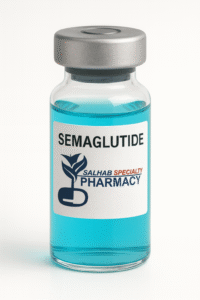
This article is a detailed, research-backed guide specifically focused on semaglutide injections for weight loss. We cover the science behind the weight loss mechanism, the complete dose escalation schedule, what clinical trials and real-world studies actually found, and practical strategies supported by evidence that help patients maximize their outcomes.
Semaglutide for Weight Loss: A GLP-1 receptor agonist medication that helps patients lose significant weight by suppressing appetite, increasing satiety, and slowing digestion.
This content is for educational purposes only. Semaglutide is a prescription medication. Consult a licensed healthcare provider before starting treatment.
Why Semaglutide Changed the Weight Loss Landscape
For much of the last century, obesity was treated primarily as a behavioral problem — something to be solved with enough dietary discipline and exercise. The pharmacological options that did exist were typically modest in efficacy, associated with significant side effects, or both. Phentermine-topiramate and naltrexone-bupropion, the previous generation of weight loss medications, produced average weight reductions of 5–9% — a clinically meaningful result, but far short of what most patients with moderate to severe obesity need to meaningfully reduce their health risks.
Semaglutide’s approval for weight management redefined expectations. It demonstrated that pharmacotherapy could consistently produce weight loss in the 15–17% range in clinical trials, with a subset of patients losing 20–25% or more. This positions semaglutide in a category previously occupied only by bariatric surgical procedures.
Equally important was the shift in clinical framing: the robust results from semaglutide trials helped reinforce the view that obesity is a chronic, biologically driven disease — not a failure of willpower — that responds powerfully to the right pharmacological treatment, particularly when combined with lifestyle intervention.
How Does Semaglutide Cause Weight Loss?
Semaglutide’s weight loss effect is driven by several complementary mechanisms, all rooted in its action as a GLP-1 receptor agonist.
Appetite Suppression via the Brain
The most significant driver of semaglutide-related weight loss is its effect on the central nervous system. Semaglutide crosses the blood-brain barrier and activates GLP-1 receptors in the hypothalamus and prefrontal cortex — the areas responsible for hunger signals, satiety perception, and reward-driven food-seeking behavior. The result is a powerful reduction in appetite and, for many patients, a significant decrease in cravings for high-calorie, high-fat, and sugary foods.
Patients on semaglutide frequently describe not just feeling full faster, but genuinely losing interest in foods that previously triggered cravings. This neurological dimension of semaglutide’s effect distinguishes it from older appetite suppressants that primarily worked through sympathomimetic (adrenaline-like) pathways.
Slowed Gastric Emptying
Semaglutide significantly delays the rate at which the stomach empties its contents into the small intestine. This prolongs post-meal satiety — the feeling of fullness that naturally follows eating — and helps patients consume substantially fewer calories without active restriction. The slowing of gastric emptying also contributes to smoother, more gradual absorption of dietary glucose, which helps stabilize blood sugar levels and reduce post-meal energy crashes that often trigger snacking.
Reduced Energy Intake — Not Increased Energy Expenditure
It is important to understand that semaglutide’s primary weight loss mechanism is through reduction of caloric intake rather than increasing metabolism. Patients lose weight because they eat significantly less, not because their body burns more calories at rest. This means that dietary quality and quantity remain important factors in determining outcomes — semaglutide is not a metabolic accelerant.
Effects on Adipose Tissue and Glucose Metabolism
Beyond appetite and satiety, semaglutide also influences fat storage at a cellular level. It reduces the accumulation of visceral adipose tissue — the metabolically active fat stored around the internal organs that drives inflammation, insulin resistance, and cardiovascular risk. Improvements in insulin sensitivity that accompany weight loss on semaglutide create a positive feedback loop: better glucose control reduces fat storage, which in turn further improves insulin sensitivity.
The Complete Semaglutide Dosage Schedule for Weight Loss
Semaglutide for weight management (Wegovy) is initiated at a very low dose and escalated gradually over approximately four months to the maintenance dose. This slow titration is essential — it allows the gastrointestinal system to adapt and significantly reduces the risk of nausea, vomiting, and other GI side effects that are most common during dose increases.
Standard Wegovy Dose Escalation Schedule
Phase | Duration | Weekly Dose |
Initiation | Weeks 1–4 | 0.25 mg |
Escalation 1 | Weeks 5–8 | 0.5 mg |
Escalation 2 | Weeks 9–12 | 1.0 mg |
Escalation 3 | Weeks 13–16 | 1.7 mg |
Maintenance | Week 17 onward | 2.4 mg |
If a patient does not tolerate a dose escalation step — due to persistent nausea, vomiting, or other GI symptoms — it is generally appropriate to remain at the previous dose for an additional 4 weeks before attempting to increase again. The goal is always to reach and maintain the 2.4 mg dose, as this is where the full therapeutic benefit is achieved, but patient comfort and tolerability must guide the pace.
Key Pharmacokinetic Points
After each subcutaneous injection, semaglutide reaches its peak concentration in the bloodstream approximately 3 days after administration. Steady-state (stable) drug levels are achieved after approximately 5 weeks of once-weekly dosing. The medication’s half-life of approximately one week means it can be injected on any day of the week, at any time of day, with or without food — though maintaining the same day each week is recommended for consistency.
Semaglutide should be administered subcutaneously (under the skin) into the abdomen, outer thigh, or upper arm. The injection site should be rotated weekly to reduce the risk of local skin reactions.
Clinical Trial Results: What the Data Actually Shows
The STEP (Semaglutide Treatment Effect in People with Obesity) trial program is the foundational dataset for semaglutide’s weight management efficacy. It represents one of the most comprehensive obesity pharmacotherapy development programs in history.
STEP 1: Non-Diabetic Adults With Obesity
The STEP 1 trial enrolled 1,961 adults with obesity or overweight with at least one weight-related comorbidity, none of whom had Type 2 diabetes. After 68 weeks:
•Mean body weight reduction: 14.9% with semaglutide vs. 2.4% with placebo
•86% of semaglutide patients lost at least 5% of body weight (vs. 32% with placebo)
•69% lost at least 10% (vs. 12% with placebo)
•51% lost at least 15% (vs. 5% with placebo)
•Nearly one-third of patients lost 20% or more of their body weight
STEP 2: Adults With Obesity and Type 2 Diabetes
In patients with both obesity and Type 2 diabetes — a population in which weight loss is notoriously difficult — semaglutide 2.4 mg still produced a mean body weight reduction of approximately 9.6%, compared with 3.4% for placebo. While weight loss is generally smaller in patients with diabetes (due to the complex metabolic effects of the disease), the benefit remained clinically substantial and was accompanied by significant improvements in glycemic control.
STEP 3: Semaglutide Plus Intensive Behavioral Therapy
The STEP 3 trial paired semaglutide with intensive behavioral therapy (including 30 sessions with a dietitian) and a low-calorie diet for the first 8 weeks. Mean weight loss reached 16.0% in the semaglutide group — among the highest in the entire program — confirming that intensive lifestyle support amplifies semaglutide’s pharmacological effect.
STEP 5: Long-Term Maintenance at 2 Years
The STEP 5 trial extended treatment to 104 weeks (2 years), demonstrating that weight loss achieved with semaglutide can be maintained long-term with continued therapy. Mean weight reduction at 2 years was 15.2% with semaglutide, compared with 2.6% for placebo — confirming that the drug’s efficacy does not substantially diminish over time when therapy is maintained.
Real-World Results vs. Clinical Trials: What to Expect in Practice
Clinical trial results, by design, reflect outcomes under near-ideal conditions — including frequent provider contact, standardized lifestyle support, and high rates of adherence. It is therefore important to also understand what real-world evidence tells us about semaglutide outcomes in routine clinical practice.
A significant study from the Cleveland Clinic, published in 2025 in the journal Obesity, tracked patients treated with injectable semaglutide (and tirzepatide) for obesity in a real-world clinical setting through December 2024. The findings reveal:
•More than 20% of patients discontinued treatment within the first 3 months (early discontinuation), and an additional 32% discontinued between 3 and 12 months.
•More than 80% of patients were on lower maintenance doses than those used in clinical trials.
•Among those who discontinued early, average weight loss was only 3.6%.
•Among those who did not discontinue and reached a high maintenance dose, average weight loss was 13.7% — closely approximating clinical trial results.
The key takeaway: treatment continuity and dose adherence are the most powerful predictors of weight loss success with semaglutide in real-world practice. Patients who stay on therapy and reach the target maintenance dose achieve results that rival clinical trial data. Those who discontinue early or never escalate to an adequate dose see substantially reduced benefits.
Higher Doses: What the 2025 STEP UP Trials Found
The most recent chapter in the semaglutide weight loss story comes from the 2025 STEP UP clinical trials, published in The Lancet Diabetes & Endocrinology. These Phase 3b trials evaluated a new 7.2 mg weekly dose of semaglutide — exactly three times the current Wegovy maintenance dose — in two separate patient populations.
STEP UP Obesity (Non-Diabetic Patients)
In the STEP UP Obesity trial, which enrolled patients with obesity but without Type 2 diabetes:
•Nearly one-third of patients on the 7.2 mg dose lost 25% or more of their starting body weight.
•Only 15% of patients on the standard 2.4 mg dose achieved the same threshold.
•The safety profile of the 7.2 mg dose was generally consistent with lower doses, with gastrointestinal effects remaining the most common adverse events.
•Approximately 20% of patients on the higher dose experienced dysaesthesia (altered touch sensation), compared with roughly 5% at 2.4 mg — a new finding requiring further study.
STEP UP Diabetes (Patients With Type 2 Diabetes and Obesity)
In patients with both Type 2 diabetes and obesity:
•Mean weight loss at 7.2 mg: 13.2%
•Mean weight loss at 2.4 mg: 10.4%
•Mean weight loss with placebo: 3.9%
•Patients on the higher dose were significantly more likely to reduce waist circumference by 20% or more and to achieve meaningful improvements in HbA1c (a measure of long-term blood sugar control).
Novo Nordisk has filed for FDA approval of the 7.2 mg dose in the United States, with approval expected in 2026. This represents the next evolution in semaglutide-based obesity treatment for patients seeking more aggressive outcomes.
How Long Does It Take to Lose Weight on Semaglutide?
Weight loss on semaglutide is progressive rather than immediate. Here is a realistic timeline based on clinical trial data:
Weeks 1–4 (0.25 mg Dose)
This is the initiation phase, and the dose is intentionally sub-therapeutic — designed to prime the body for escalation rather than to produce maximum effect. Some patients notice mild appetite reduction and early weight loss during this phase, but it is modest and variable.
Weeks 5–16 (Escalation Phase)
As the dose increases through 0.5 mg, 1.0 mg, and 1.7 mg, appetite suppression and weight loss effects become progressively more pronounced. Many patients notice their hunger patterns shifting meaningfully during this phase — eating less at meals and feeling full much sooner. Observable weight loss is common from week 4 onward, and significant change is typically apparent by weeks 8–12.
Week 17 Onward (Maintenance at 2.4 mg)
Once the maintenance dose is reached, weight loss continues to accumulate. In the STEP 1 trial, weight continued to decrease progressively through approximately week 60, after which it plateaued. This means the full magnitude of semaglutide’s effect takes over a year to manifest.
Realistic Expectations at Key Milestones
•3 months: Most patients on semaglutide have lost approximately 5–8% of body weight.
•6 months: Weight loss in the range of 10–12% is typical for adherent patients.
•12 months: Average weight loss of 12–15% is supported by both trial and real-world data.
•68 weeks (approximately 16 months): Clinical trial average at the standard 2.4 mg dose: ~14.9%.
Evidence-Based Strategies to Maximize Your Weight Loss Results
Semaglutide is designed as an adjunct to lifestyle modification — and the data is clear that patients who engage meaningfully with both the pharmacological and behavioral dimensions of treatment achieve the best outcomes.
1. Prioritize Protein Intake
One of the key concerns with any significant weight loss is the loss of lean muscle mass alongside fat. Prioritizing dietary protein — aiming for approximately 1.2–1.6 grams of protein per kilogram of body weight per day — helps preserve muscle tissue during weight loss. High-protein foods also tend to be more satiating, which complements semaglutide’s appetite-suppressing effects.
2. Resistance Training
Strength and resistance training are uniquely effective at preserving lean muscle mass during calorie restriction. This is particularly important on semaglutide, which produces meaningful weight reduction. Without resistance training, a portion of weight lost may be lean mass rather than fat — reducing metabolic rate and making long-term weight maintenance more challenging.
3. Eat Smaller, More Frequent Meals
Because semaglutide slows gastric emptying, large meals — particularly high-fat meals — can worsen nausea, especially during the early escalation phase. Breaking intake into smaller, more frequent meals spaced throughout the day tends to reduce GI discomfort and helps distribute caloric intake more evenly.
4. Stay Hydrated
Reduced appetite on semaglutide can sometimes mean patients inadvertently reduce fluid intake along with food intake. Dehydration worsens nausea and fatigue. Drinking adequate water throughout the day — separate from meals — is an important and often overlooked aspect of semaglutide management.
5. Work With a Registered Dietitian
The STEP 3 trial demonstrated the highest weight loss outcomes when semaglutide was combined with intensive dietary support. Working with a registered dietitian to develop a sustainable, nutrient-dense eating pattern tailored to your preferences and reduced appetite is one of the most evidence-supported strategies for maximizing long-term outcomes.
6. Do Not Skip Doses or Self-Reduce
Real-world data consistently shows that dose consistency is critical. Patients who self-reduce their dose, frequently skip injections, or discontinue treatment prematurely achieve significantly less weight loss. If side effects are driving dose non-adherence, the appropriate response is to discuss this with your healthcare provider — dose adjustments, anti-nausea medications, or other management strategies may allow continued treatment.
Dealing With a Semaglutide Weight Loss Plateau
It is normal and expected for weight loss to slow and eventually plateau during extended semaglutide therapy. Clinical trial data shows that weight loss typically reaches its nadir at around week 60 and then stabilizes. This is not a failure of the medication — it reflects the body reaching a new physiological equilibrium at a lower set point.
What Is Causing the Plateau?
Several factors contribute to weight loss plateaus on any intervention, including semaglutide. As body weight decreases, total daily energy expenditure also decreases (because a smaller body requires fewer calories to maintain). Metabolic adaptation — the body’s tendency to defend against weight loss by reducing basal metabolic rate — is a well-established biological response. Semaglutide mitigates, but does not fully eliminate, these adaptations.
Strategies When Progress Slows
•Reassess caloric intake: As weight decreases, caloric needs also decrease. What was a calorie deficit at your starting weight may no longer be one at your current weight.
•Increase physical activity: Adding or intensifying exercise — particularly resistance training — can help maintain or modestly increase metabolic rate during weight loss maintenance.
•Discuss dose optimization: For patients who have plateaued at a lower dose, discussing a return to the full 2.4 mg maintenance dose with your provider may be appropriate.
•Evaluate adherence: Plateaus sometimes reflect gradual drift in dietary habits. Keeping a food diary for several weeks can objectively identify whether caloric intake has increased.
What Happens When You Stop Semaglutide Injections?
This is one of the most important questions patients and prospective patients ask — and the answer has significant implications for how semaglutide therapy should be framed.
The STEP 4 withdrawal trial provides the clearest evidence: participants who discontinued semaglutide after an initial period of treatment regained two-thirds of their lost weight within the following 52 weeks, while those who continued semaglutide maintained their weight loss.
This pattern is consistent with what we understand about obesity as a disease: the biological drivers of weight gain — elevated hunger hormones, reduced satiety signaling, altered reward responses to food — return when semaglutide is stopped. In this sense, semaglutide works in a way analogous to blood pressure medication or statins: it manages a chronic condition effectively while it is being used, but the underlying condition returns when the treatment is withdrawn.
This does not mean semaglutide should be used indefinitely in every patient — that is an individual clinical decision based on patient goals, tolerability, and ongoing benefit. But it does mean that patients and their providers should plan for long-term therapy from the outset, rather than expecting a finite “course” of treatment to produce permanent results.
Frequently Asked Questions
How much weight can you lose on semaglutide injections?
In clinical trials, patients on semaglutide 2.4 mg (Wegovy) lost an average of 14.9% of their body weight over 68 weeks. In real-world practice, patients who stay on therapy and reach the maintenance dose achieve results closely approximating trial data — roughly 13–15%. Patients on the emerging 7.2 mg dose may lose 20% or more. Individual results vary significantly depending on adherence, dietary changes, and physical activity.
When do you start losing weight on semaglutide?
Most patients notice meaningful appetite suppression and early weight loss by weeks 4–8. Significant and visible weight loss generally becomes apparent by weeks 12–16. Weight loss continues to accumulate progressively through approximately week 60, at which point it tends to plateau.
Is semaglutide better than other weight loss injections?
Semaglutide (Wegovy) has demonstrated superior weight loss compared to liraglutide (Saxenda) in head-to-head trials. Tirzepatide (Mounjaro/Zepbound), a dual GLP-1/GIP receptor agonist, appears to produce greater average weight loss than semaglutide at comparable doses. The choice between agents depends on individual patient factors, insurance coverage, tolerability, and clinical goals — and should always be made in consultation with a healthcare provider.
Can you take semaglutide injections just once a month?
No. Semaglutide injections are dosed once weekly, not monthly. The drug’s half-life of approximately one week requires weekly administration to maintain steady-state blood concentrations and consistent therapeutic effect. Reducing the frequency to monthly would result in sub-therapeutic drug levels and significantly reduced efficacy.
Does semaglutide cause muscle loss?
Like any significant calorie reduction, semaglutide can result in some degree of lean muscle mass loss alongside fat loss. Studies show that approximately 25–39% of total weight lost on semaglutide may be lean mass rather than fat tissue. Prioritizing dietary protein intake and regular resistance exercise are the most effective strategies to minimize muscle loss during treatment.
How do you inject semaglutide for weight loss at home?
Semaglutide (Wegovy) is provided in a pre-filled, multi-dose injection pen designed for self-administration. Injections are administered subcutaneously into the abdomen, outer thigh, or upper arm. The pen has a safety cap and auto-needle mechanism that minimizes the technical skill required. Brief training from a pharmacist or healthcare provider is typically sufficient for most patients to administer their own injections confidently.
Conclusion
Semaglutide injections for weight loss have revolutionized the treatment of obesity, offering a pharmacological option that bridges the gap between traditional lifestyle interventions and bariatric surgery. By targeting the biological drivers of appetite and satiety, semaglutide enables patients to achieve significant, sustainable weight loss and meaningful improvements in metabolic health.
However, the key to success with semaglutide lies in treatment continuity, adherence to the dose escalation schedule, and the integration of the medication into a broader lifestyle strategy. As research continues to evolve — including higher doses and dual-agonist therapies — the future of weight management appears increasingly grounded in evidence-based pharmacotherapy that treats obesity as the chronic disease it truly is.


