The copper peptide serum market in 2025 is a category in which the gap between the best and worst products is extraordinarily wide — and in which that gap is almost entirely invisible to consumers shopping by label claims, packaging aesthetics, or brand reputation. A product can cost $180, feature the word “GHK-Cu” prominently on its outer box, carry impressive clinical language throughout its marketing, and still contain a concentration of copper tripeptide-1 so low that it produces no meaningful biological effect on the skin. Equally, a $45 serum from a less prominently marketed brand can contain a well-formulated, stable, clinically relevant concentration of GHK-Cu that delivers genuine results.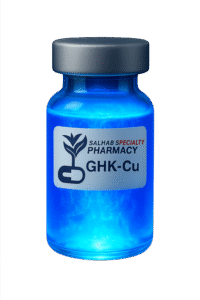
This guide exists to close that information gap. It provides the technical framework — concentration standards, formulation chemistry, packaging science, and label-reading skills — needed to evaluate any copper peptide serum independently of its price, branding, or marketing claims. By the end of it, you will have the tools to identify, with reasonable confidence, whether a given product is likely to deliver the clinical benefits that the peer-reviewed science on GHK-Cu supports.
1. The Problem with the Copper Peptide Serum Market
Copper peptides occupy an unusual regulatory space in cosmetic formulation. Unlike pharmaceutical drugs, which must demonstrate efficacy at a stated concentration to receive approval, cosmetic skincare products in most markets — including the United States, where they are regulated under the FDA’s cosmetic framework, and the European Union, where they fall under the Cosmetics Regulation — are not required to disclose the concentrations of their active ingredients. A brand is required to list all ingredients in descending order of concentration on the INCI (International Nomenclature of Cosmetic Ingredients) list, but it is not required to state what percentage of the formulation any given ingredient represents.
This creates an environment in which the same ingredient — copper tripeptide-1 — can appear on a product label whether it constitutes 2% of the formulation or 0.001%. The consumer has no straightforward way to distinguish between these concentrations without either independent laboratory testing or a voluntary disclosure from the manufacturer. The result is a market in which a significant proportion of products categorised as copper peptide serums are, in practical terms, delivering doses of GHK-Cu well below the threshold at which clinical studies have observed dermal effects.
The additional complication is formulation stability. GHK-Cu is a chemically sensitive molecule that can be degraded by pH extremes, exposure to light and air, incompatible co-ingredients, and improper storage conditions. A product that begins its shelf life with an adequate concentration of GHK-Cu can arrive at the consumer with a significantly reduced effective dose if it has been formulated, packaged, or stored carelessly. The consumer who experiences no results after twelve weeks of consistent use may attribute the failure to the ingredient rather than to the product — an attribution error that benefits brands selling ineffective formulations and disadvantages those investing in rigorous manufacturing.
Navigating this market successfully requires developing an evaluative framework that goes beyond trusting label claims. What follows is that framework.
2. Concentration: The Most Important Variable No One Discloses
The clinical evidence for GHK-Cu is explicitly concentration-dependent. In vitro studies demonstrating collagen stimulation in human dermal fibroblasts have used concentrations ranging from 0.01 nanomolar — at which GHK-Cu is biologically active at the receptor level — to concentrations in the micromolar range that produce maximum collagen output. Translating these in vitro concentrations to topical formulation percentages is not straightforward, as dermal bioavailability of topically applied GHK-Cu varies with the formulation vehicle, the skin barrier condition, and the delivery method. The most commonly cited practical formulation range for cosmetic copper peptide products is 0.1% to 2% GHK-Cu, with the majority of well-regarded clinical formulations clustered between 0.5% and 1%.
Products formulated below 0.1% are unlikely to produce meaningful biological effects even with optimal delivery, because the concentration gradient driving passive diffusion through the stratum corneum is insufficient to achieve therapeutically relevant dermal concentrations. Products above 2% offer no demonstrated additional benefit over lower concentrations and introduce a mildly elevated risk of the pro-oxidant effects that can occur when copper is present in excess of the skin’s copper-chelating capacity.
Since most brands do not voluntarily disclose the exact concentration of copper tripeptide-1 in their formulations, the most practical proxy available to consumers is ingredient list position. On the INCI list, ingredients are listed in descending order of concentration by weight. An ingredient appearing in the first third of the list is present at a higher concentration than one appearing in the final quarter. For a copper peptide serum to be likely to contain GHK-Cu at concentrations above the 0.1% threshold, copper tripeptide-1 should appear no later than the midpoint of the ingredient list — and ideally in the first third, among the primary active ingredients rather than among the preservatives and trace additives that typically populate the end of the list.
Brands that voluntarily disclose their GHK-Cu concentration on the product page or packaging deserve credit for that transparency, and the disclosure itself — regardless of the specific number — is a positive indicator of manufacturing standards and willingness to be held accountable to the efficacy claims being made.
3. GHK-Cu Integrity: How to Tell If the Molecule Is Still Active
A copper peptide serum can begin its production run with an adequate GHK-Cu concentration and arrive in the consumer’s hands in a biologically compromised state. Understanding the indicators of molecular integrity — and what causes degradation — is therefore an important component of product evaluation.
The most reliable visual indicator of GHK-Cu integrity is colour. The intact copper-peptide complex absorbs light in the yellow-orange portion of the visible spectrum, producing the characteristic blue to blue-green hue observed in well-formulated GHK-Cu serums. This colour is not a dye or a marketing choice; it is an intrinsic optical property of the copper coordination complex. At concentrations above approximately 0.3 to 0.5%, this colour should be visible in a standard aqueous serum. A copper peptide serum that is marketed as containing meaningful GHK-Cu concentration but presents as water-clear warrants legitimate scrutiny — the complex may be degraded, the concentration may be inadequate, or an encapsulation technology may be masking the colour.
Colour fading over the life of a product is equally informative. If a serum that was visibly blue or teal when first opened has progressively lightened to a pale yellow or become colourless by mid-bottle, oxidative degradation of the copper complex has occurred, most likely due to repeated exposure to air through inadequate packaging, storage in bright light, or temperature fluctuations. At this point, the product’s efficacy is significantly reduced regardless of the original concentration.
A mild metallic scent is normal and expected in intact copper peptide formulations. A rancid, chemical, or strongly altered scent is a potential indicator of formulation breakdown and should prompt discontinuation.
4. pH and Formulation Science
The relationship between formulation pH and GHK-Cu stability is one of the most practically important and most frequently overlooked aspects of copper peptide serum evaluation. GHK-Cu is most stable and biologically active within a pH range of approximately 5.5 to 7.0 — a range that closely approximates the skin’s natural surface pH and that supports the optimal coordination geometry of the copper ion within the tripeptide complex.
At pH levels below 5.0, protonation of the histidine residue within the GHK tripeptide disrupts the copper coordination bond. The complex dissociates, releasing a free copper ion that is no longer biologically guided by the peptide’s receptor-targeting properties and that carries the pro-oxidant risk associated with unbound transition metals. This is the chemical basis for the widely circulated guidance against combining copper peptides with direct acids in the same application session — it is not a matter of the ingredients merely being unhelpful together, but of the acid actively degrading the active ingredient.
A product formulated at pH 4.0 or below — regardless of its copper tripeptide-1 content — will deliver a compromised GHK-Cu complex to the skin by the time it penetrates the stratum corneum. Reputable manufacturers formulate copper peptide serums at a pH that preserves complex integrity, and this is a detail worth enquiring about when a brand’s technical team is accessible.
A complementary formulation consideration is the choice of chelating agents and preservative system. Some chelating agents — EDTA being the most common example — can compete with the GHK tripeptide for copper ion binding, potentially displacing the copper from the complex and reducing the effective GHK-Cu concentration in the product. Formulators aware of this interaction use alternative chelating or preservative approaches; this is a detail only apparent to those reviewing the full ingredient list with knowledge of chelation chemistry, but it is another variable separating rigorous formulation from routine ingredient assembly.
5. Packaging: Why It Directly Affects Efficacy
The GHK-Cu complex is vulnerable to three environmental factors that responsible packaging design mitigates: oxidation by atmospheric oxygen, photodegradation by UV and visible light, and thermal degradation from heat exposure. Each of these degradation pathways reduces the effective concentration of intact GHK-Cu delivered to the skin over the product’s usage period.
Airless pump dispensers represent the gold standard for copper peptide serum packaging. By maintaining a hermetic seal around the product reservoir and dispensing formulation through a one-way valve without admitting air to replace the dispensed volume, airless pumps effectively eliminate repeated oxygen exposure — the primary cause of copper complex oxidation in use. Each time a jar is opened or a standard dropper bottle is used, oxygen is admitted to the headspace above the formulation, and this repeated oxidative exposure progressively degrades the product.
Opacity is the second critical packaging criterion. Standard clear glass or transparent plastic packaging exposes the formulation to ambient light throughout its use period. UV radiation and high-energy visible light are capable of photolytically cleaving coordination bonds in metal-peptide complexes, contributing to the same degradation that reduces the characteristic blue colour over time. Opaque packaging — amber glass, coloured plastic, or foil-wrapped containers — substantially reduces this exposure. The combination of an airless pump mechanism in an opaque dispenser represents the packaging configuration most protective of GHK-Cu integrity from first use through the final pump.
Jar packaging — regardless of how aesthetically appealing or premium it appears — is the least appropriate format for a copper peptide serum. Every opening exposes the entire product surface to air, and the finger-dipping contact that jar application typically requires introduces additional oxidative and contamination risks. If a copper peptide product is available only in a jar, the formulation should be assumed to carry a significantly shorter effective potency window than the stated period-after-opening.
6. Supporting Ingredients That Amplify Results
The supporting cast of ingredients surrounding GHK-Cu in a serum formulation determines both how effectively the copper peptide is delivered to the dermis and how well the skin environment supports the repair and synthesis processes GHK-Cu initiates. Several categories of co-ingredients are particularly valuable.
Penetration enhancers. Ingredients that improve the passage of active molecules through the stratum corneum — including certain fatty alcohols, propanediol, and niacinamide at specific concentrations — can increase the dermal bioavailability of GHK-Cu without altering its molecular structure. This is meaningfully different from pH-altering ingredients such as acids, which change the chemistry of the active; penetration enhancers simply make the delivery of the intact complex more efficient.
Glycosaminoglycans and humectants. Sodium hyaluronate, sodium PCA, and glycerin create a moisture-rich environment at the skin surface that supports passive diffusion of the water-soluble GHK-Cu complex and provides the immediate surface hydration that makes skin feel and look improved while the deeper structural changes develop over weeks. These ingredients contribute to the early-stage results — the improved texture and hydration visible within the first four to six weeks — that sustain user commitment through the longer timeline required for structural collagen changes.
Barrier-repairing lipids. Ceramides, phytosphingosine, and fatty acids included in the serum vehicle (rather than reserved entirely for the moisturiser) help maintain the integrity of the skin barrier through which GHK-Cu must pass. A compromised or disrupted barrier is less permeable to water-soluble actives including copper peptides, so barrier support within the formulation itself directly supports delivery efficiency.
Calming botanicals. Centella asiatica extracts — particularly madecassoside and asiaticoside — provide complementary anti-inflammatory and collagen-stimulating activity through mechanisms independent of GHK-Cu. Their inclusion in a copper peptide formulation broadens the anti-inflammatory and repair profile of the product without any incompatibility risk. Bisabolol, panthenol, and allantoin serve similar functions in reducing surface reactivity and supporting tolerability.
Antioxidant co-actives. Tocopherol (vitamin E), resveratrol, and ferulic acid provide antioxidant support through mechanisms distinct from GHK-Cu’s superoxide-scavenging activity. Their inclusion creates a broader free radical defence profile than GHK-Cu alone and helps protect the newly synthesised collagen from oxidative degradation before it has been fully cross-linked and stabilised.
7. Ingredient Red Flags That Undermine Copper Peptides
Several ingredients commonly found in skincare serums are incompatible with GHK-Cu and should not appear in the same formulation as copper peptides, either because they destabilise the copper complex or because they create a pH environment that compromises its activity.
Direct acids. Glycolic acid, lactic acid, salicylic acid, citric acid at acidifying concentrations, and ascorbic acid all lower formulation pH to a range that disrupts the copper coordination bond. A product that lists copper tripeptide-1 alongside glycolic acid or ascorbic acid at meaningful concentrations is internally self-defeating — the acidic ingredients are actively degrading the copper complex within the bottle. This is a clear formulation error and a reliable signal that the product was not developed with a thorough understanding of GHK-Cu chemistry.
High-concentration EDTA. Ethylenediaminetetraacetic acid, used as a chelating preservative in many cosmetic formulations, binds metal ions competitively. At high concentrations relative to the copper tripeptide content, EDTA can strip copper from the GHK complex, reducing effective GHK-Cu concentration in the product. EDTA at very low concentrations — listed at the tail end of the INCI list — is unlikely to pose a significant problem, but its presence at higher concentrations is a formulation concern in a copper peptide product.
Alcohol as a primary solvent. Denatured alcohol (alcohol denat.) or ethanol listed in the first several positions of the ingredient list indicates that alcohol is a primary solvent in the formulation. At these concentrations, alcohol lowers formulation pH, disrupts the skin barrier that copper peptides must traverse, and can strip the moisture that supports GHK-Cu diffusion. A dry, tight feeling immediately after application of a supposed copper peptide serum is often attributable to a high alcohol content that simultaneously irritates and undermines the ingredient it claims to deliver.
Fragrance and essential oils. Neither fragrance (parfum) nor essential oils — including lavender oil, citrus oils, and rose oil, which are common in premium-positioned skincare — have any beneficial interaction with GHK-Cu, and both carry sensitisation risks that work against the anti-inflammatory goals copper peptides serve. Their presence in a copper peptide formulation is a formulation choice that prioritises sensory experience over biological efficacy, and for users with sensitive or reactive skin it may actively interfere with the tolerability that makes copper peptides valuable.
8. How to Read a Copper Peptide Serum Label
Developing a systematic approach to reading copper peptide serum labels — combining knowledge of INCI conventions, position-as-concentration proxy, and known incompatibilities — enables meaningful product comparison without access to laboratory testing.
The first step is locating copper tripeptide-1 on the ingredient list. This is the standardised INCI name for GHK-Cu; no other name is an exact substitute, though some trademarked copper peptide derivatives exist under names such as copper tripeptide-2 or specific brand trade names. Once located, assess its position: in the first third of the list indicates a likely concentration above 0.5%; in the middle third suggests a concentration between 0.1% and 0.5%; in the final third, or listed after the preservatives, indicates a concentration likely below the clinically meaningful threshold.
The second step is scanning for pH-incompatible actives in the same formulation. If glycolic acid, citric acid at acidifying concentrations, ascorbic acid, or salicylic acid appear anywhere in the list alongside copper tripeptide-1, the formulation is internally contradictory and the GHK-Cu is likely to be partially degraded before it reaches the skin.
The third step is assessing the supporting ingredient quality. Are there meaningful concentrations of supportive humectants — sodium hyaluronate, glycerin — in the first half of the list? Are barrier-supporting or calming ingredients present? Are the preservatives mild and appropriate for a complex containing a metal-peptide active? A well-formulated copper peptide serum should have a coherent ingredient philosophy in which every component is present in service of the active’s delivery and the skin’s response to it.
The fourth step is assessing the packaging before purchase. Airless pump in an opaque container: appropriate. Dropper bottle in clear glass: suboptimal for long-term potency. Wide-mouth jar: inappropriate for a product claiming meaningful copper peptide activity.
9. Price as a Proxy for Quality: What the Research Actually Suggests
In the copper peptide serum category, retail price has a weaker relationship to formulation quality than in many other skincare categories — and the direction of the relationship is not always what consumers expect. Several of the most rigorously formulated GHK-Cu products available are mid-priced, reflecting the relatively modest ingredient cost of copper tripeptide-1 at appropriate concentrations alongside a well-designed supporting vehicle. Conversely, some of the most expensively positioned copper peptide serums are formulated with GHK-Cu concentrations that laboratory testing has found to be far lower than their price point implies — in some cases, at concentrations more consistent with a marketing inclusion than a therapeutic dose.
This pattern reflects several dynamics in the premium skincare market. Packaging cost, brand equity, retail margin structures, and marketing expenditure all contribute significantly to the retail price of a skincare product independently of raw material and formulation costs. Copper tripeptide-1 is available from multiple cosmetic ingredient suppliers at costs that do not scale linearly with product retail price — meaning a $180 serum does not necessarily contain nine times more GHK-Cu than a $20 alternative.
The most reliable price-quality signals in this category are not absolute price points but rather practices associated with manufacturing rigour: voluntary concentration disclosure, peer-reviewed references cited in support of specific formulation claims rather than generic ingredient claims, independent third-party efficacy testing, and transparent communication about formulation pH and packaging rationale. Brands that engage substantively with formulation science in their public-facing communication are, as a general rule, more likely to be producing products with genuine GHK-Cu activity than those relying on pricing and aesthetic positioning alone.
10. Choosing by Skin Type and Primary Concern
Within the universe of adequately formulated, well-packaged copper peptide serums, the final selection criterion should be alignment with specific skin type and primary concern.
For anti-aging and collagen rebuilding as the primary goal, the most important formulation variables are GHK-Cu concentration and the presence of complementary collagen-supportive co-actives — vitamin E, resveratrol, ferulic acid, and other peptide classes such as palmitoyl tripeptide-1. The serum texture should be lightweight enough to layer under a dedicated collagen-supporting moisturiser. Look for concentration disclosure or strong INCI list position as the primary quality indicator.
For sensitive, rosacea-prone, or reactive skin, the priority shifts to the supporting ingredient profile alongside GHK-Cu. Centella asiatica extracts, panthenol, bisabolol, and allantoin as co-calming ingredients create a formulation that doubles down on the anti-inflammatory properties of GHK-Cu. The product should be explicitly fragrance-free, essential-oil-free, and free of high-alcohol content. A slightly higher-molecular-weight serum texture — a gel or emulsion rather than a water-thin liquid — can provide additional barrier support that benefits reactive skin.
For dry or dehydrated skin, a copper peptide serum with higher concentrations of humectants — sodium hyaluronate at multiple molecular weights, glycerin, sodium PCA — provides the surface and near-surface hydration that complements GHK-Cu’s stimulation of intrinsic glycosaminoglycan production in the dermis. The combination of topical and endogenous hydration from a well-matched formulation produces more pronounced early-stage plumping than copper peptides alone.
For post-procedure recovery, the copper peptide serum selected should prioritise wound-healing co-ingredients — allantoin, panthenol, and centella asiatica alongside GHK-Cu — and should be explicitly free of any potential irritants including fragrance, alcohol, and direct acids. The product will be applied to a compromised barrier and potentially inflamed, highly permeable skin, making ingredient safety a higher priority than it is in standard topical use.
For oily or acne-prone skin, a lightweight, water-based gel serum with niacinamide as a complementary active — for its sebum-regulating and anti-inflammatory properties — is the most appropriate format. Avoid copper peptide serums formulated with occlusive silicones or heavy emollients that may contribute to congestion on already pore-prone skin.
11. What to Expect Once You Have Found the Right Product
Having applied the evaluation framework above and selected a copper peptide serum that meets the concentration, formulation, and packaging standards described, it is important to calibrate expectations appropriately — because even the best copper peptide serum works on a biological timeline that requires patience.
In the first two to four weeks, the most likely perceptible changes are improved skin hydration, a slightly smoother surface texture, and in some users a transient period of minor textural disruption as collagen remodeling initiates — the phenomenon informally called “copper uglies” that resolves without any change to the routine. Between weeks five and eight, early structural improvements in firmness and fine line depth become measurable, and skin tone evenness typically begins to improve. At months three and four, significant improvements in skin firmness, elasticity, and fine lines become clearly visible in side-by-side photographic comparison. Between months five and six, genuine structural changes — including increased dermal thickness visible in high-resolution skin analysis — are achievable with consistent twice-daily use.
The most effective way to assess whether a correctly chosen product is working is standardised photographic documentation every four weeks under consistent lighting and positioning. The gradual nature of copper peptide results makes day-to-day assessment unreliable and frequently leads to underestimating results that are clearly apparent in periodic comparison photographs. Users who adopt this documentation practice consistently report significantly greater satisfaction with their copper peptide results than those assessing their skin subjectively on a daily basis.
Finally, and critically: a well-formulated copper peptide serum produces no results when stored in a cupboard. Twice-daily, every-day application — morning and evening, separated from pH-incompatible actives, followed by appropriate moisturiser and morning SPF — is the application discipline that converts the best copper peptide serum from a well-intentioned purchase into a genuinely transformative part of an anti-aging routine.
12. Frequently Asked Questions
What concentration of copper peptides should a serum contain? Clinical studies demonstrating meaningful dermal effects have used concentrations between 0.1% and 2%. The ingredient copper tripeptide-1 should appear in the first half of the INCI ingredient list for the product to be considered adequately concentrated. Voluntary concentration disclosure from the brand is the most reliable indicator.
Why is my copper peptide serum blue? The blue colour is caused by the intact GHK-Cu coordination complex. It is an intrinsic property of the molecule, not a dye, and serves as a useful quality indicator in standard aqueous serums. Colour fading during the product’s use period may indicate oxidative degradation.
Does copper peptide serum expire? Yes. The GHK-Cu complex is sensitive to oxidative degradation from light, air, and heat. Most formulations carry a period-after-opening of 6 to 12 months, though products in airless, opaque packaging stored correctly may retain potency for longer. Colour fading is a practical indicator that a product’s efficacy has declined.
Can copper peptide serum be used on sensitive skin? Yes — GHK-Cu is inherently anti-inflammatory and does not cause the irritation associated with retinol or direct acids. Sensitive skin users should select fragrance-free formulations with calming co-ingredients and should introduce the product as a single new active before adding others to the routine.
Should I refrigerate my copper peptide serum? Refrigeration slows oxidative degradation and extends effective potency, but it is not essential for products already in airless, opaque packaging stored away from direct light and heat. If a product is in suboptimal packaging — clear glass or a dropper bottle — refrigeration becomes more meaningfully beneficial.
How much serum should I use per application? Three to five drops, or one pump, is sufficient to cover the full face and neck with adequate coverage. Applying more does not increase efficacy proportionally and shortens the product’s lifespan without benefit.
Can I mix copper peptide serum with my moisturiser? Mixing a copper peptide serum directly into a moisturiser before application is not recommended. Doing so dilutes the active concentration, may introduce incompatible ingredients from the moisturiser, and removes control over the application order and absorption time that maximise efficacy. Apply the serum first, allow it to absorb for 60 to 90 seconds, then apply moisturiser separately.
Key Takeaways
Choosing an effective copper peptide serum requires looking past the marketing layer that dominates the category and evaluating products against the objective criteria that formulation science supports: an adequate GHK-Cu concentration confirmed by INCI list position or voluntary disclosure; a formulation pH between 5.5 and 7.0; packaging in an opaque, airless dispenser; a supporting ingredient profile that enhances delivery and complements GHK-Cu’s mechanisms; and an absence of the acids, high-concentration chelating agents, and fragrances that undermine the copper complex. Price, packaging aesthetics, and brand prestige are unreliable guides in this category. The science, by contrast, is clear — and the products that honour it are identifiable.
Bottom line: The best copper peptide serum is the one formulated at a clinically relevant GHK-Cu concentration, at the right pH, in packaging that protects the molecule throughout its shelf life, with supporting ingredients that amplify rather than compromise its delivery. Those criteria, applied consistently, will identify the products capable of delivering what the clinical evidence on GHK-Cu actually promises.


