One of the most common frustrations with copper peptides is the absence of a dramatic before-and-after moment. Unlike a chemical peel that visibly resurfaces the skin over days, or a retinol serum that produces noticeable peeling and purging as proof that something is happening, copper peptides work silently. The transformation they produce is real, progressive, and backed by solid clinical evidence — but it unfolds on the biological schedule of collagen synthesis and tissue remodeling rather than on the accelerated timeline of surface disruption.
Understanding that schedule — knowing precisely what is happening in your skin during each phase, what early signs to watch for, and what results are realistic at six weeks versus six months — is the single most important factor in getting the results copper peptides are capable of delivering. This guide provides that roadmap in full detail.
“In controlled clinical studies, participants using GHK-Cu formulations showed statistically significant improvements in skin firmness, collagen density, and wrinkle depth — but the most meaningful changes emerged after 8 to 12 weeks of consistent use, not after days.” — Synthesis of peer-reviewed GHK-Cu clinical literature
Why the Copper Peptide Timeline Is Different from Every Other Active
To understand why copper peptides work on the schedule they do, it is helpful to understand what separates them mechanically from faster-acting ingredients. Most skincare actives that produce visible results quickly — retinol, AHAs, vitamin C — do so by working at or near the surface of the skin. Retinol accelerates cell turnover, pushing newer cells to the surface faster. AHAs dissolve the bonds between dead surface cells, revealing fresher skin beneath. These are surface or near-surface effects, and their timelines reflect that proximity to visible skin.
Copper peptides, by contrast, work primarily in the dermis — the deep layer of skin that sits beneath the epidermis. The dermis is where collagen and elastin fibers are produced, maintained, and broken down by fibroblast cells. It is where the structural scaffolding of youthful skin lives, and it is where GHK-Cu has its most consequential effects. Changes to dermal architecture — the density of collagen fibers, the hydration of the extracellular matrix, the vascular density of the capillary network — take weeks to months to become apparent at the skin surface. This is not a flaw in the ingredient; it is a reflection of how biological tissue remodeling actually works.
The clinical benchmark for collagen synthesis timelines is instructive: in wound healing research, significant new collagen deposition in a healing wound begins around days 5–7 post-injury, peaks around three weeks, and continues maturing and remodeling for up to two years. Topical GHK-Cu is stimulating a gentler version of this same process in intact skin — which means results are less dramatic but more sustained, and the early phases of the process are invisible even though the biology is already underway.
Weeks 1–2: What Is Happening at the Cellular Level
In the first two weeks of consistent copper peptide use, the skin is biologically active even though the effects are not yet visible. GHK-Cu is being absorbed through the stratum corneum — skin penetration research confirms that topical application of GHK-Cu in aqueous formulations produces measurable increases in copper concentration in the stratum corneum, with some studies showing concentrations up to 400 times baseline levels following a single application — and beginning to interact with fibroblasts in the dermis.
During this period, GHK-Cu is initiating several processes simultaneously. It is upregulating the expression of genes encoding collagen type I and type III in fibroblasts, essentially turning up the volume on the skin’s own collagen production machinery. It is activating matrix metalloproteinases — the enzymes responsible for breaking down old, damaged, cross-linked collagen — which begins the remodeling process necessary for the new collagen matrix to form. And it is beginning to suppress the production of pro-inflammatory cytokines, including TNF-alpha and IL-6, which reduces background dermal inflammation.
What you are likely to notice during weeks one and two, if anything: a subtle improvement in skin texture and surface smoothness, attributable to GHK-Cu’s initial effects on glycosaminoglycan production. Some users also report that their skin feels slightly more hydrated and “plump” than usual, even before any structural changes have had time to develop. Others notice nothing at all during this period, which is equally normal — particularly if baseline skin hydration is already good.
This is also the window in which any immediate tolerability issues would appear. Unlike retinol, which commonly causes redness, flaking, and stinging during early use, copper peptides very rarely produce these responses. In fact, if you experience significant irritation in the first two weeks, it is more likely attributable to a co-ingredient in the formulation — a fragrance, a solvent, or a secondary active — than to GHK-Cu itself.
Weeks 3–4: The Adjustment Phase and “Copper Uglies” Explained
Weeks three and four represent what might be called the adjustment phase — and this is the period during which a minority of users encounter what the skincare community has informally named the “copper uglies.” Understanding this phenomenon is important, because it causes some users to abandon copper peptides prematurely at the precise moment when the biology is working as intended.
The copper uglies refers to a transient worsening of skin texture — sometimes manifesting as increased surface roughness, minor breakouts, dullness, or a generally uneven appearance — that some users experience during weeks two to five of copper peptide use. The likely mechanism is straightforward: GHK-Cu is activating matrix metalloproteinases to break down old, degraded collagen, but the new collagen being synthesized in response has not yet matured and organized into functional fibers. During this transitional window, the extracellular matrix is in a state of active remodeling, and the skin surface temporarily reflects that instability.
It is worth emphasizing several important points about this phenomenon. First, it affects a minority of users, not the majority — most people pass through weeks three and four without any worsening. Second, it is fundamentally different from retinol purging, which involves accelerated cell turnover pushing trapped sebum to the surface; copper peptide adjustment is a dermal remodeling effect, not an epidermal one. Third, and most critically, it is transient — clinical observation and user-reported data both suggest it resolves within two to four weeks without any change to the routine. Discontinuing copper peptides at this point is analogous to abandoning a workout program because muscle soreness appears in the first week.
If you encounter this phase, the recommended approach is to continue using copper peptides at the same frequency, ensure you are not simultaneously introducing other new actives that might independently cause skin disruption, and be patient. Adding a barrier-repairing moisturizer — one rich in ceramides, fatty acids, and cholesterol — can support the skin’s integrity during this transitional period without interfering with the remodeling process.
Weeks 5–8: The First Visible Results
For most users, the period between weeks five and eight marks the first clearly visible and objectively measurable changes in the skin. This is when the new collagen and elastin being produced by GHK-Cu-stimulated fibroblasts is beginning to accumulate in the dermis in sufficient quantities to produce surface-level effects, and when the glycosaminoglycan production stimulated by GHK-Cu — including hyaluronic acid and dermatan sulfate — is meaningfully increasing the dermis’s intrinsic water-binding capacity.
The changes that typically emerge during this phase include noticeably improved skin hydration and plumpness, which gives the skin a fuller, more cushioned appearance even before fine lines have meaningfully reduced. Surface texture improves — the skin feels smoother to the touch and has a more refined visual texture, particularly in areas of photodamage or superficial roughness. Fine lines in high-movement areas such as around the eyes and mouth, where collagen loss tends to manifest earliest, may begin to appear shallower or less defined.
Skin tone evenness also often improves during this phase. GHK-Cu’s anti-inflammatory properties reduce the chronic, low-grade inflammation that contributes to uneven pigmentation, and its promotion of healthy cell turnover helps surface cells shed and renew more regularly. Users who entered the routine with mild to moderate hyperpigmentation frequently report a more even complexion emerging during weeks five to eight.
What remains unchanged at this stage: significant structural changes such as meaningful reduction of deep wrinkles, visible skin thickening, or dramatic improvement in sagging are not yet apparent. These require the longer timeline discussed in the following sections. Managing expectations during this phase is important — the improvements at weeks five to eight are real and measurable, but they are not yet the full expression of what copper peptides can do.
Months 3–4: When the Real Transformation Begins
At months three and four, users who have maintained consistent twice-daily application are typically entering the phase that justifies copper peptides’ reputation as a transformative ingredient. The collagen being synthesized and deposited in the dermis over the preceding months is now mature enough — meaning sufficiently cross-linked and organized into functional fiber networks — to produce structural changes visible at the skin surface.
The primary clinical finding at this stage is improved skin firmness and elasticity. Cutometry measurements — the clinical instrument used to quantify skin elasticity — consistently show statistically significant improvements in cohorts using GHK-Cu formulations at the 12-week mark compared to controls. In practical terms, this manifests as a subtle but real improvement in the way the skin bounces back when pressed or stretched, a reduction in the degree to which the face appears to “fall” under gravity by midday, and improved skin tension particularly in the jaw and cheek areas where collagen and elastin loss most visibly contributes to sagging.
Fine lines and moderate wrinkles — as distinct from deep, structural facial creases — show meaningfully more pronounced improvement at months three and four than they did at weeks five to eight. The accumulated effect of ongoing collagen synthesis and matrix organization is now sufficient to partially fill and smooth these lines from beneath the surface, in a way that produces more dramatic visible results than any surface-level treatment could. Several controlled trials have documented 20 to 35 percent reductions in the measurable depth of fine lines at the 12-week mark in participants using GHK-Cu formulations.
For users applying copper peptides to the scalp for hair loss, months three and four are also the window in which follicle-level changes — extended anagen phase duration, increased dermal papilla cell activity — begin producing visible hair density improvements. Increased hair count at the crown and temples, reduced shedding during washing and combing, and improvements in overall hair texture are the changes most frequently reported by users at this stage.
Months 5–6: Structural Skin Changes
Between months five and six, long-term users of copper peptides are likely to observe the class of benefits that sets GHK-Cu apart from the vast majority of skincare actives: genuine structural improvements in the skin that go beyond surface hydration, texture refinement, or fine line reduction.
The most clinically significant of these is skin thickening. The dermis — the deep, collagen-rich layer of skin — thins progressively with age, contributing to the fragility, crepiness, and translucency characteristic of older skin. Very few topical ingredients have demonstrated the ability to reverse this thinning, because doing so requires not just stimulating collagen production but accumulating sufficient new collagenous tissue to produce a measurable change in dermal volume. GHK-Cu, applied consistently over five to six months, has been shown in histological studies to produce measurable increases in dermal thickness — a finding replicated across multiple independent research groups.
Significant reductions in moderate-to-deep wrinkles become apparent in this phase. Where months three and four produced improvements in fine lines, the longer timeline of months five and six allows structural collagen remodeling to address the deeper extracellular matrix changes that underlie more significant facial lines. This is not the dramatic, overnight transformation of an injectable filler; it is a genuine biological improvement in the tissue architecture that gives skin its structure.
Users also frequently report improvements in skin resilience during this phase — the skin recovers more quickly from environmental stressors, appears less inflamed after sun exposure or a disrupted sleep schedule, and feels generally more robust. This reflects the cumulative effect of GHK-Cu’s antioxidant and anti-inflammatory activity operating alongside its structural benefits over a sustained period.
Beyond 6 Months: Long-Term Results and Maintenance
The question of what happens beyond six months of copper peptide use is one that fewer studies have addressed directly — most clinical trials run for 8 to 16 weeks rather than six to twelve months. However, the mechanistic evidence and the biology of collagen remodeling suggest that benefits continue to accumulate, albeit at a decelerating rate, as the skin reaches a new functional equilibrium.
What is clear from both the clinical literature and from long-term user observation is that copper peptides require ongoing use to maintain results. Unlike a surgical procedure or an injectable treatment that produces results persisting independently of continued intervention, topical copper peptides are continuously supporting the skin’s repair and synthesis processes. Discontinuing use after six months will not immediately reverse the structural improvements achieved — the new collagen already present in the dermis does not disappear overnight — but the rate of ongoing collagen synthesis, matrix maintenance, and free radical neutralization will gradually decline back toward the age-typical baseline.
The optimal long-term strategy for most users is indefinite twice-daily maintenance use, with the realistic expectation that results will plateau after six to nine months and then remain stable as long as the routine is maintained. Adding professional treatments such as microneedling every three to six months can further stimulate the collagen production that copper peptides support topically, producing results beyond what either intervention achieves independently.
How to Tell If Your Copper Peptide Product Is Actually Working
Given that copper peptides work gradually and their early-stage effects are subtle, users frequently find themselves uncertain whether their product is effective or whether they are simply attributing normal skin variation to an ingredient that is not actually doing much. There are several reliable indicators that a copper peptide formulation is biologically active and working as intended.
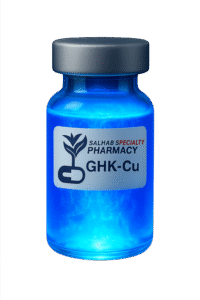
Colour of the product. GHK-Cu in its intact, active form produces a characteristic blue or blue-green hue. A product claiming to contain meaningful concentrations of copper peptides that is water-white or colourless should be questioned — either the concentration is too low to produce visible colour, or the copper complex has degraded. This is not a universal rule (some formulations use encapsulation technologies that mask colour), but for standard serums it is a useful indicator.
pH of the formulation. GHK-Cu is most stable and active at a pH between 5.5 and 7.0. Products formulated significantly below pH 5 — detectable by a sharp, acidic sensation on the skin — are likely to have destabilized the copper complex. Most reputable copper peptide brands will disclose their formulation pH on request if it is not listed on the packaging.
Skin feel within the first few days. Even before structural changes develop, GHK-Cu’s immediate effects on glycosaminoglycan production and surface cell behavior tend to produce a subtle improvement in skin texture and hydration within the first one to two weeks. If a product produces absolutely no perceptible change in skin feel after two full weeks of consistent use, it is worth evaluating whether the formulation, concentration, or application method may be suboptimal.
Photographic documentation. Because copper peptide results are gradual, they are frequently invisible to the naked eye when assessed day-to-day. Taking standardized, well-lit photographs in the same position and lighting conditions every four weeks is the single most reliable way to track progress. Comparing month-one and month-three photographs consistently reveals changes that were imperceptible in daily observation.
Absence of irritation as a sign of compatibility. Unlike retinol or direct acids, where the presence of some irritation can function as a proxy for biological activity, copper peptides should produce no irritation. Redness, stinging, or significant sensitivity is a sign that something in the formulation — not the GHK-Cu itself — is causing a reaction, and should prompt ingredient-list review rather than tolerance-building.9. Factors That Determine Your Before and After Results
The magnitude of the before-and-after transformation achievable with copper peptides is not fixed — it varies considerably between individuals based on a set of well-understood factors. Being clear-eyed about these variables enables realistic expectation-setting and more strategic use of the ingredient.
Baseline skin condition and age. Users who begin using copper peptides with more advanced photodamage, more significant collagen depletion, or older biological skin age have more potential structural improvement available — and therefore, in theory, more dramatic before-and-after results possible. However, they also require longer timelines for those results to materialize. A 30-year-old with mild early aging may see faster, though subtler, results than a 55-year-old with significant collagen loss, for whom the changes, though slower to develop, may be more transformative in absolute terms.
Product concentration and formulation quality. The clinical evidence for GHK-Cu is concentration-dependent. Products formulated below 0.1% are unlikely to produce meaningful biological effects regardless of how consistently they are used. Products formulated at 1–2% in a stable, appropriately pH-adjusted vehicle are likely to produce results significantly faster and more prominently than lower-concentration alternatives. This is one of the most consequential variables under a user’s direct control.
Application consistency. The collagen synthesis and matrix remodeling driven by copper peptides is a continuous biological process that requires consistent stimulation to maintain momentum. Intermittent use — applying a copper peptide serum three times per week rather than twice daily — will produce proportionally reduced results and extended timelines. Twice-daily, every-day application is what the clinical evidence supports.
Concurrent routine compatibility. Users who are inadvertently destabilizing their copper peptide by applying a low-pH acid immediately before or after will significantly reduce the ingredient’s efficacy. Reviewing the pH and sequencing of all active ingredients in the routine is important when optimizing for results.
Sun protection. Copper peptides stimulate the production of new collagen and rebuild dermal architecture. UV exposure simultaneously degrades that same collagen through the generation of reactive oxygen species and the activation of collagenase enzymes. Without consistent, broad-spectrum SPF use, a significant portion of the structural improvement being generated by copper peptides is being undone by daily UV exposure. SPF 50 applied every morning is not optional if meaningful before-and-after results are the goal.
Professional treatment adjuncts. Users who combine topical copper peptide use with periodic microneedling, radiofrequency therapy, or laser resurfacing consistently report more dramatic before-and-after outcomes than those using topical copper peptides alone. These procedures independently stimulate collagen production via the wound healing response, and copper peptides applied post-procedure can amplify the fibroblast response by an estimated 40 to 60 percent compared to the procedure performed without copper peptide aftercare.10. How to Accelerate and Maximize Copper Peptide Results
Within the constraints of the biological timeline described above, there are several evidence-supported strategies for maximizing the speed and magnitude of copper peptide results.
Use an airless pump formulation stored away from light and heat. GHK-Cu is sensitive to oxidative degradation — exposure to light, air, and heat can break down the copper complex over time, progressively reducing the effective concentration of the product you are using. Airless pump packaging minimizes air exposure; opaque bottles minimize light exposure. Storing copper peptide serums away from direct sunlight and not in humid bathrooms extends their effective shelf life significantly.
Apply to damp skin. Applying copper peptide serum to slightly damp skin — patted mostly dry after cleansing but not bone dry — improves the spreadability of the formulation and enhances penetration into the stratum corneum. This is a minor but consistent optimization recommended by formulators familiar with GHK-Cu delivery.
Pair with niacinamide. Niacinamide at 4–5% is one of the most compatible and synergistic actives to layer with copper peptides. It operates at a compatible pH, reinforces the skin barrier, reduces inflammation through independent pathways, and supports the overall skin environment in which GHK-Cu is working. The combination is gentle enough for sensitive skin, effective enough for mature skin, and safe for twice-daily use by virtually all skin types.
Consider microneedling pre-treatment. Two weeks of twice-daily copper peptide use prior to a microneedling session primes fibroblast activity, and post-microneedling copper peptide application exploits the enhanced dermal penetration created by the micro-channels. This protocol — copper peptides before, during, and after microneedling — is one of the most evidence-supported approaches for users seeking to maximize structural skin improvement.
Photograph consistently. This deserves emphasis beyond its role as a tracking tool. Consistent photographic documentation is the most reliable way to observe gradual change that is invisible in daily comparison. Users who document their skin every four weeks consistently report noticing meaningful improvements that would have gone unappreciated without the side-by-side reference.
Frequently Asked Questions
How long do copper peptides take to work? Initial improvements in hydration and texture appear within 4–6 weeks. Measurable changes in firmness and fine lines emerge at 8–12 weeks. Significant structural changes — skin thickening, reduction of moderate-to-deep wrinkles — require 3–6 months of consistent twice-daily use.
What are the first signs that copper peptides are working? The earliest detectable signs are improved skin hydration and surface texture smoothness, reflecting GHK-Cu’s stimulation of glycosaminoglycan production in the dermis. These typically emerge within the first 4–6 weeks.
What are “copper uglies” and should I stop using copper peptides if I experience them? Copper uglies is an informal term for the transient skin worsening — increased texture, minor breakouts, or dullness — that a minority of users experience in weeks 2–5 of copper peptide use. It is attributed to GHK-Cu activating matrix metalloproteinases that break down old collagen before new collagen has fully replaced it. It resolves on its own within two to four weeks, and discontinuing use at this point is counterproductive. Continue the routine and support your skin barrier with a ceramide-rich moisturizer.
Can copper peptides cause purging? Copper peptides do not cause purging in the way that retinol or exfoliating acids do, as they do not accelerate epidermal cell turnover. The temporary textural worsening described above is a dermal remodeling effect, not a classic purge, and is both less common and shorter-lived than retinol-associated purging.
Do copper peptides work for everyone? Copper peptides produce measurable biological effects in all adult skin types that have been studied, but the magnitude of visible results varies based on baseline skin condition, product quality, consistency of use, sun protection habits, and the presence or absence of complementary treatments. Users with greater baseline collagen depletion and those who apply copper peptides rigorously twice daily consistently report more significant transformations than users with mild skin aging or inconsistent habits.
Is it normal for copper peptides to smell metallic? A mild metallic scent in a copper peptide serum is normal and indicates that the copper complex is intact. A strong or rancid smell, however, may indicate oxidative degradation of the formulation — particularly relevant if the product has been stored in suboptimal conditions or is nearing the end of its shelf life.
Are copper peptide results permanent? The structural collagen improvements produced by long-term copper peptide use are real and durable, but they are not permanent in the absence of continued use. Discontinuing copper peptides after six months will not immediately reverse results — the collagen already deposited remains — but ongoing synthesis, matrix maintenance, and antioxidant activity will gradually decline toward the age-typical baseline. Long-term maintenance use is the strategy that preserves the results achieved.
Key Takeaways
The copper peptide before-and-after story is ultimately a story about biological patience. GHK-Cu is one of the most rigorously studied and mechanistically sophisticated anti-aging ingredients available over the counter, but its transformative potential is inseparable from the timeline of collagen synthesis and dermal remodeling — processes that operate on a schedule of weeks to months, not days. Users who understand this timeline, who invest in a high-quality formulation, who apply it consistently twice daily, and who protect new collagen from UV degradation with daily SPF will reliably achieve before-and-after results that are structurally meaningful: firmer, thicker, more hydrated skin with improved surface texture, reduced fine lines, and a more resilient, even-toned complexion.
The most important single piece of guidance this article can offer is this: photograph your skin at the start and every four weeks thereafter. The transformation that copper peptides produce does not announce itself day-to-day. It appears quietly, gradually, and unmistakably when you compare month one to month three — and again when you compare month three to month six.
Bottom line: Copper peptides are slow to show but lasting in effect. Trust the timeline, maintain the consistency, protect with SPF, and document with photographs. The results are real — they simply require the patience to let the biology unfold on its own schedule.


